
September 23, 2026
What Is a Drone Flute? How Double and Triple Drones Work
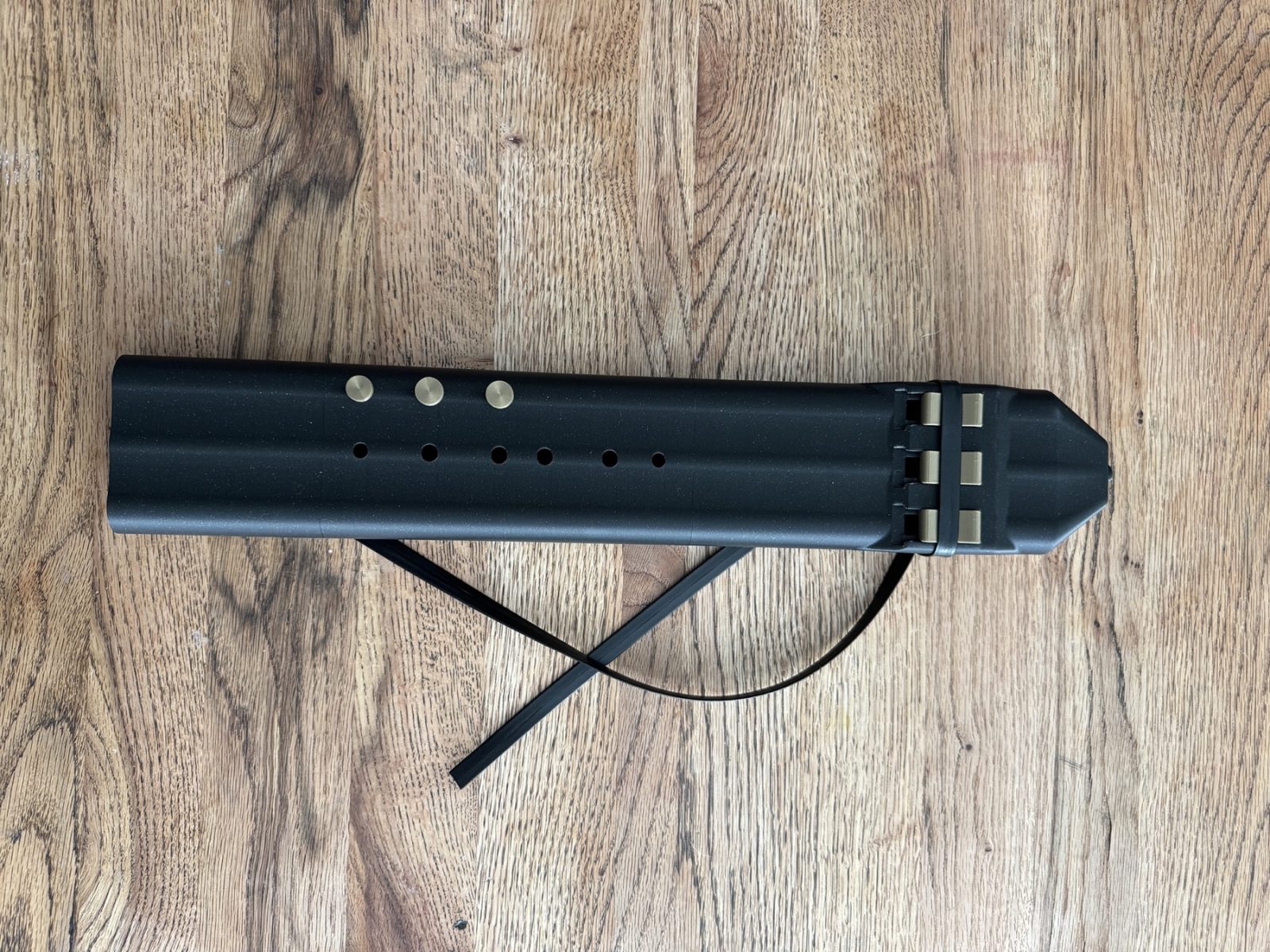
A drone flute is two or three flutes built into one body and played with a single breath. One chamber has finger holes and carries the tune. Another holds one steady note underneath it for as long as you keep blowing. That steady note is the drone, and it's the reason a drone flute sounds full even when you're playing very little.
How a drone flute plays two notes at once
Start with an ordinary Native American-style flute. Your breath goes in at the mouthpiece and comes out through a narrow channel under the block, the small piece strapped to the top of the flute. That thin stream of air splits on a sharp edge at the sound hole, and that's where the tone starts. The finger holes further down set the pitch.
A drone flute builds that sound-making part twice, side by side. Each chamber gets its own block and its own sound hole, and you blow into both through the same mouthpiece. The melody chamber has the finger holes. On a double drone flute the other chamber has none, so nothing changes its length, and it sounds one note for as long as your breath lasts.
That note is the flute's home note, the one the melody side plays with every hole covered. The drone on our A drone flute is an A. Cover all six holes and both chambers sound that A together. Lift a finger and the melody moves while the drone stays put.
Why it's hard to play a wrong note
Native American-style flutes play a minor pentatonic scale. On a flute in A, that's A, C, D, E and G, then A again an octave up. Put those notes over a low A and none of them lands a half step away from the drone, which is where harsh-sounding clashes come from. The E, a fifth above, rings out clearly. The G leans a little, as if it wants to settle onto A.
So you can wander. Play four slow notes and stop, and what comes out sounds like a tune with an accompaniment, because that's what it is: one player, two parts. It's a big reason people who have never played an instrument can pick up a drone flute and enjoy it on the first day, and it's why experienced players reach for one when they want to slow down and fill a room.
What a triple drone flute adds
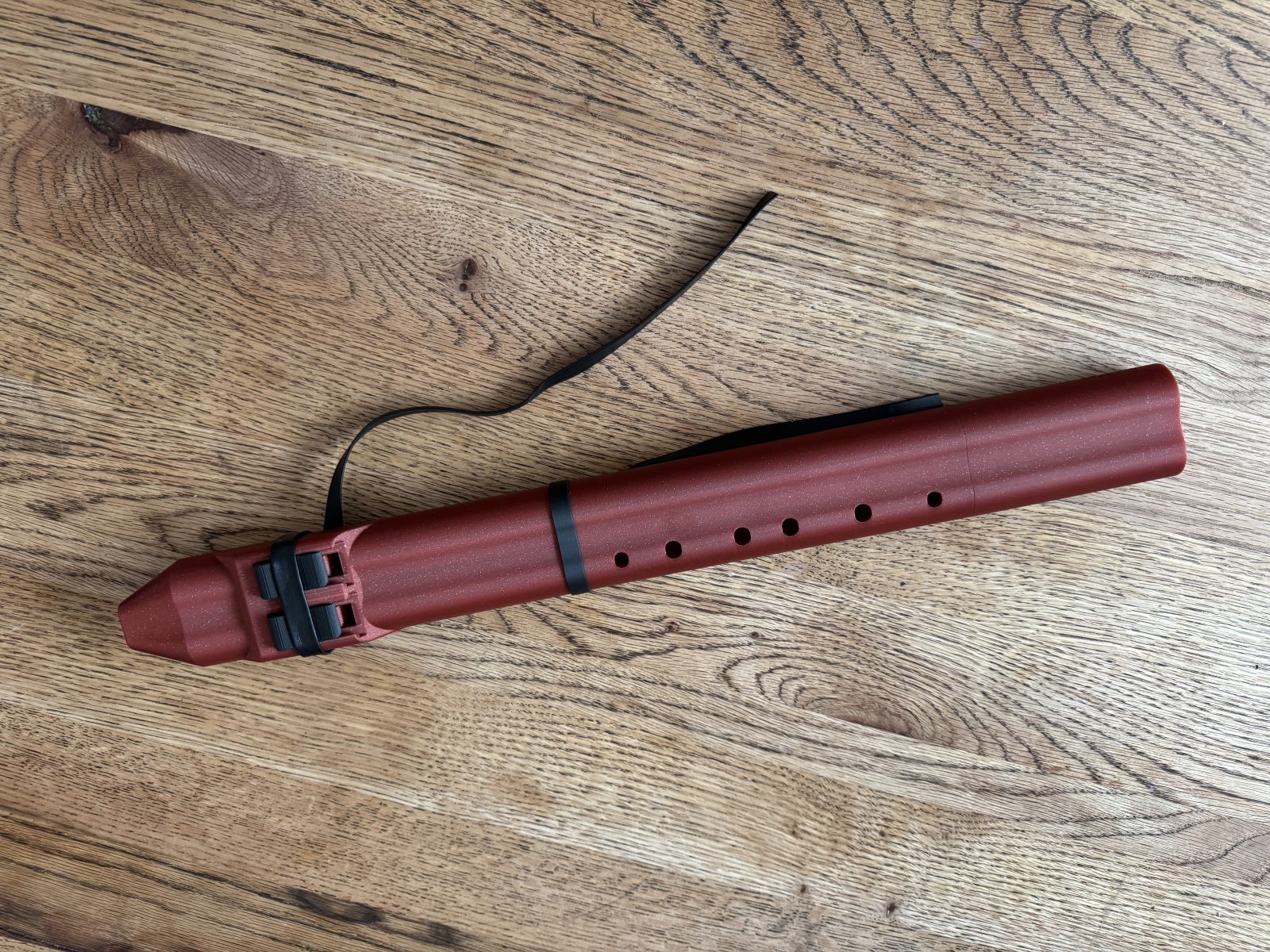
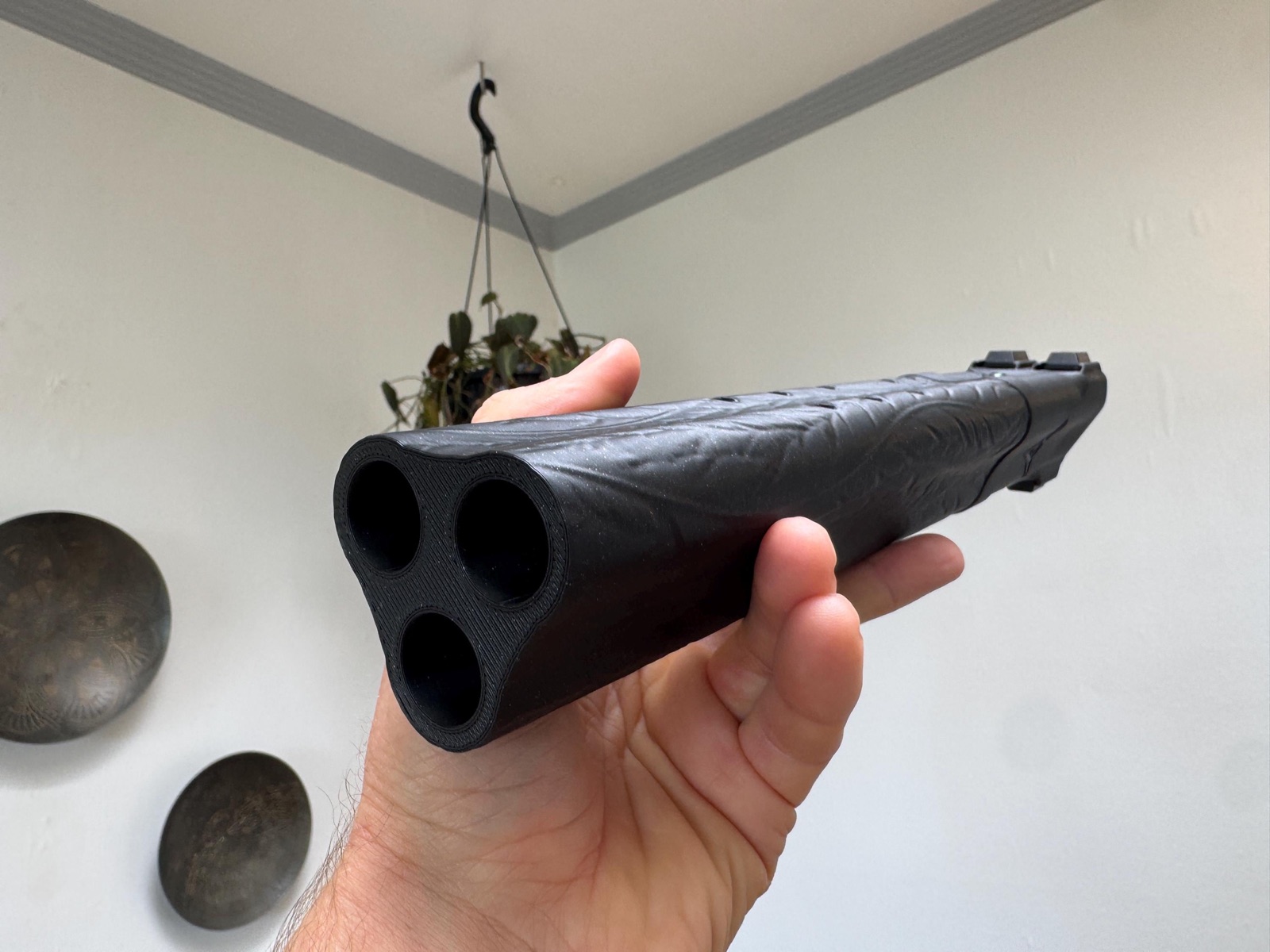
A triple drone flute has three chambers, each with its own block. On ours, one chamber carries the six finger holes and the other two sound underneath it. With two drone voices against one melody voice, the balance tips toward the drone, and the tune rides on a bigger bed of sound. It also takes more breath, since you're feeding three streams of air instead of two.
On most of our triples, the chamber next to the melody side has a short row of three holes of its own, level with the lowest three finger holes. On the black and crimson A triples, small plugs sit in those holes. Opening or closing holes on a drone chamber changes the note it plays, which changes the chord under your melody.
An old idea
Getting two voices out of one breath is nothing new. Shepherds in Bulgaria have long played the dvoyanka, a double flute made from a single piece of wood. The right pipe carries the tune and the left holds a drone. They used their playing to guide their flocks, and the sheep learned to recognize the melodies.
In the ancient city of Teotihuacan, near present-day Mexico City, makers built clay flutes with four long pipes running from a single mouthpiece. The Native American flute has a long story of its own, which we tell in A Brief History of the Native American Flute.
How to play a drone flute
If you can play a Native American-style flute, you can play a drone flute. The melody side fingers the same way. A few things feel different at first:
- It takes more air. One breath is feeding two or three chambers, so you'll run short sooner than you're used to. Breathe low, from the belly, and keep the stream steady.
- Don't push. Blow too hard and the flute jumps up into a squeak. Blow too softly and the tone goes thin and breathy. The sweet spot is in between, and you'll find it within a few minutes.
- Start on the home note. Cover every hole and blow gently. Listen to the voices settle together before you move. Then lift one finger at a time, starting at the bottom. The first three fingers you lift walk you up the scale.
- Slow down. The drone fills the space between your notes, so there's nothing to rush. Long notes with a few rests between them suit a drone flute better than fast runs.
Two things to know before you buy
First, a drone ties the flute to one key. An A drone flute lives in A minor, and the drone keeps sounding its A whatever else is going on. On your own, that's no limit at all. If you play along with a guitarist working through chord changes, though, some of those chords will rub against the drone.
Second, right now every flute in our shop is tuned to A = 432 Hz. That's a little under 2 percent lower in pitch than A = 440 Hz, the standard most pianos and recordings use. If you play alone, or with other instruments tuned to 432, you won't notice a thing. Next to a piano at standard pitch, the flute will sound slightly flat. A guitarist can tune down to match, since many tuner apps let you set the reference to 432 Hz. If you mostly play with other people at standard pitch, ask us about a custom tuning before you order.
Which drone flute should you get?
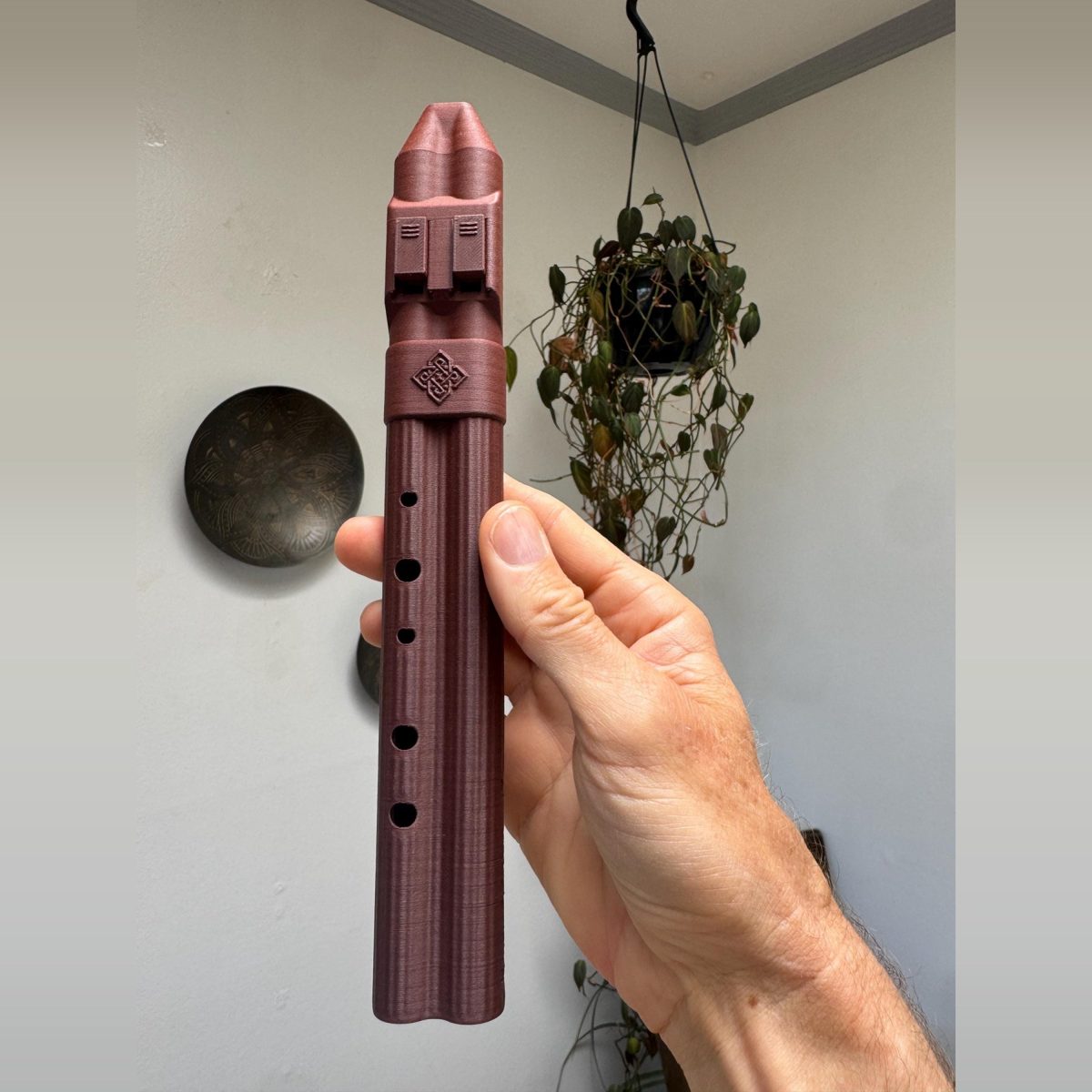
- A first flute, or a gift for a child: the Pocket Drone Flute F♯5. The finger holes sit close together for small hands, and there's a real drone under its five notes.
- Your first drone flute: the Drone Flute A. A is a comfortable middle key for most adult hands, and one drone is plenty to learn on. If your hands are on the small side, the Drone Flute B4 is a step higher and a little shorter. For a lower voice, the Crimson Drone Flute F♯ sits three half steps below A.
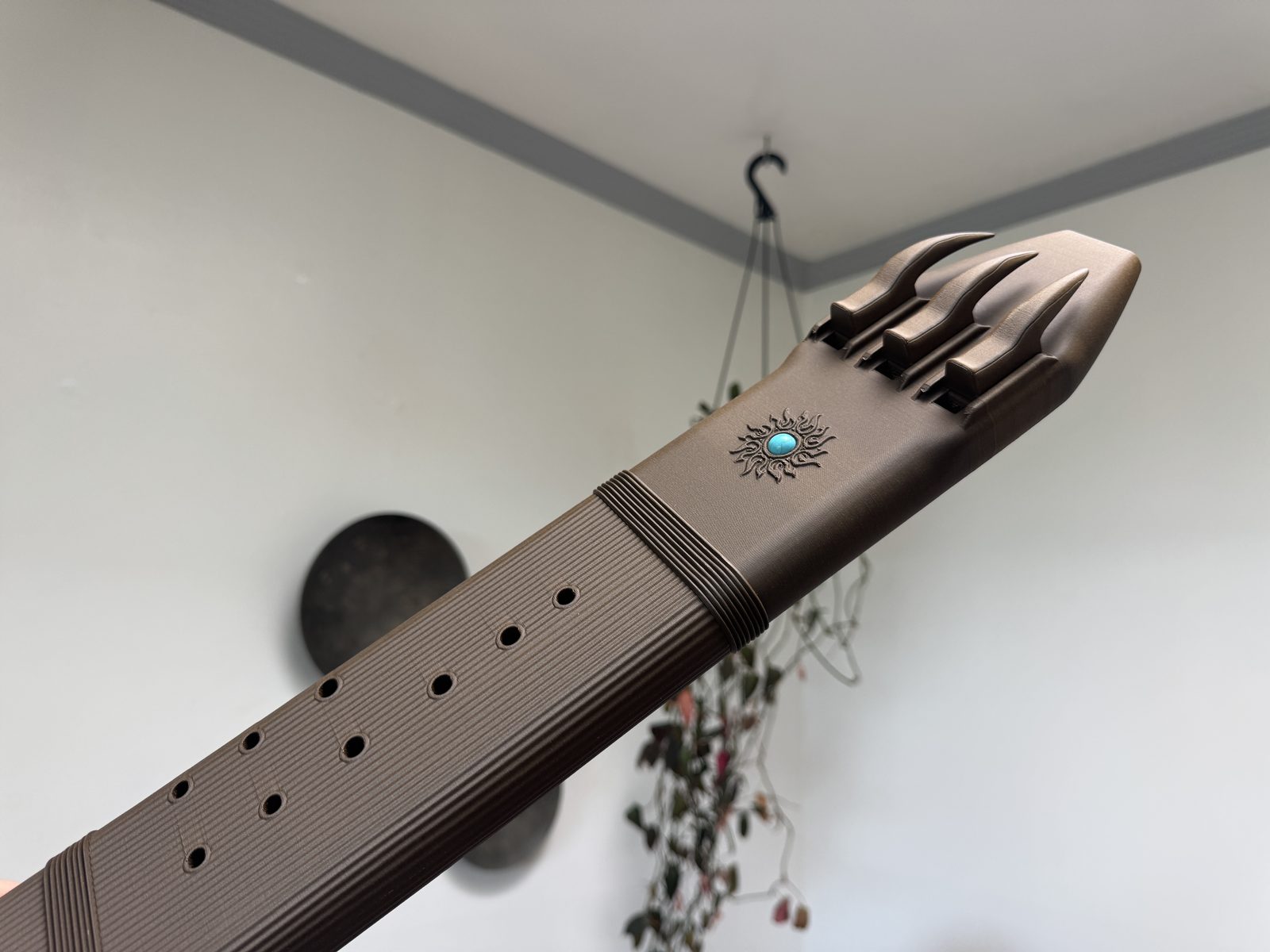
- The biggest sound, for meditation and sound baths: a triple. The black triple drone and the crimson triple drone, both in A, have the same layout, and the Raven puts three chambers in A inside a sculpted, feather-textured body. For something deeper, the Triple Drone Flute F♯4 is a big flute that's lighter in the hand than it looks.
- Playing along with friends: a single-chamber flute, like the Flute A or the five-hole Flute F♯4. With no drone underneath, you can move with the song when the chords change.
Whichever one you pick, start with every hole covered, and hold that first note long enough to hear the drone underneath it.